


Introduction
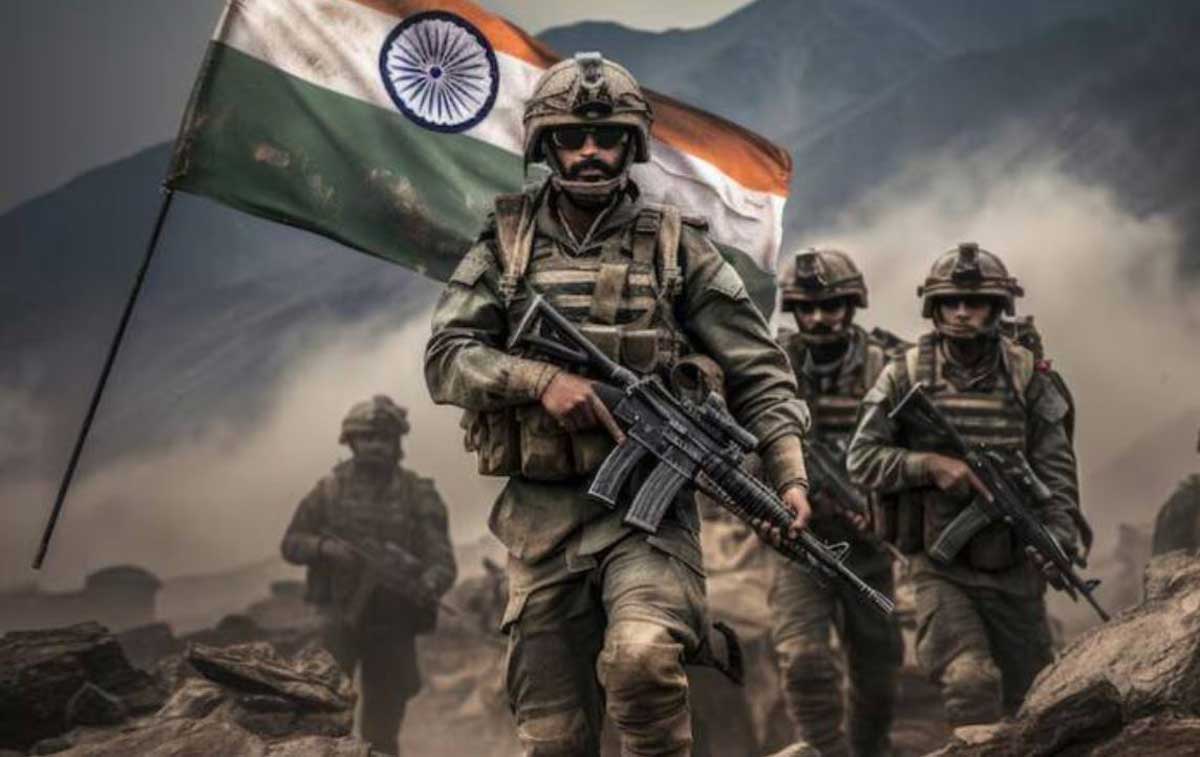
The officer corps of the Indian Army has traditionally been regarded as the intellectual, moral and operational backbone of India’s military power. Unlike large-scale manpower recruitment systems that primarily focus on numerical strength, officer recruitment is fundamentally concerned with identifying individuals capable of leading soldiers in combat under conditions of fear, uncertainty, exhaustion and political complexity. In the contemporary era, where warfare is increasingly hybridised, technology-driven and psychologically demanding, the quality of military leadership has become even more critical. Consequently, the Indian Army’s officer selection architecture has evolved into a highly specialised system intended not merely to assess academic competence, but to evaluate personality, psychological robustness, decision-making ability, social adaptability and leadership potential.
India today possesses one of the world’s largest and most diversified officer recruitment ecosystems. The structure caters to school-level entrants, university graduates, engineers, lawyers, NCC cadets, technical specialists and women officers through multiple entry streams. Over decades, the system has evolved from a colonial-era elite model into a broad-based meritocratic framework intended to attract talent from every social and geographic segment of India.
At the same time, the recruitment structure is under growing pressure. Declining officer-to-soldier ratios, increasing technological complexity in warfare, changing career aspirations among Indian youth, competition from the private sector and the demands of future conflict are forcing the Army to reassess how officers are identified and trained. Simultaneously, debates continue regarding whether the present selection mechanisms — particularly the Service Selection Board system — remain fully aligned with the requirements of twenty-first century warfare.
Structure Of Officer Recruitment In Indian Army

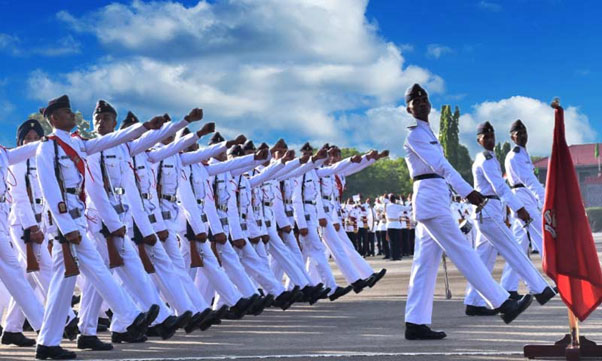
Officer recruitment in the Indian Army broadly operates through the twin frameworks of Permanent Commission and Short Service Commission. Permanent Commission officers pursue a full military career until retirement, while Short Service Commission officers serve for a limited tenure with provisions for extension or selective permanent absorption.
Among the most prestigious pathways into the officer cadre is the National Defence Academy entry system. Candidates are selected after Class XII through the UPSC-conducted examination followed by Service Selection Board interviews and medical evaluation. The NDA system is strategically important because it attempts to inculcate military ethos, discipline and leadership culture at an early age. The academy remains the principal long-service career officer producing institution for the armed forces.
The Combined Defence Services examination constitutes another major route for graduates aspiring to join the Indian Military Academy or Officers Training Academy. Conducted by the Union Public Service Commission, the CDS pathway attracts a large number of civilian graduates from across the country. Candidates undergo a written examination followed by the multi-stage SSB evaluation process.
Technical recruitment pathways have also expanded significantly in recent years. The Technical Entry Scheme recruits’ candidates after the 10+2 stage, especially those with strong science and mathematics backgrounds. Increasingly, the Army is integrating engineering-oriented aptitude assessments and JEE Main scores into technical recruitment streams as it seeks technologically capable officer candidates suited for future warfare environments.
Engineering graduates enter through the Technical Graduate Course, while Short Service Commission technical entries provide operational flexibility and permit induction of specialised technical manpower without long-term pension liabilities. Alongside these systems, the NCC Special Entry Scheme rewards candidates possessing NCC ‘C’ certificates and leadership exposure by exempting them from written examinations and allowing direct access to SSB interviews.
Specialised branches such as the Judge Advocate General department recruit law graduates to handle military legal affairs, operational law and court martial systems. Separate mechanisms also exist for induction into medical, dental, veterinary and other professional military services.
The multiplicity of recruitment streams reflects the increasingly diversified operational requirements of the modern Indian Army. Unlike many military systems dominated by a single commissioning academy, India has deliberately created a distributed recruitment architecture in order to widen the talent pool and maintain social diversity within the officer corps.
The Philosophy Behind Officer Selection
The Indian Army’s selection philosophy is based on a central belief that military leadership cannot be measured solely through academic performance or intellectual knowledge. Instead, leadership is regarded as a product of personality structure, behavioural consistency, emotional balance and social influence capability. This explains why the Service Selection Board system focuses far more heavily on personality assessment than on conventional examination methods.
The Army seeks what are termed Officer-Like Qualities. These include effective intelligence, initiative, courage, responsibility, emotional stability, social adaptability, communication capability, decision-making ability and leadership under stress. The assumption underlying the system is that training can refine and sharpen leadership potential, but cannot fundamentally create it where it does not exist.
As a result, candidates who are academically brilliant frequently fail the selection process because they may lack group influence capability, emotional balance or behavioural maturity. Conversely, candidates from modest educational backgrounds sometimes succeed because they demonstrate authenticity, composure and leadership instinct under pressure.
This emphasis on personality over academic elitism gives the Indian officer selection system its distinctive character. The Army attempts to identify not merely intelligent individuals, but individuals capable of commanding trust and maintaining operational cohesion in combat conditions.
The Service Selection Board System
The Service Selection Board remains the defining feature of Indian officer recruitment. Developed after the Second World War with substantial influence from British military psychology systems, the SSB attempts to conduct a holistic evaluation of the candidate over several days rather than through a single interview interaction.
The process begins with screening tests that include Officer Intelligence Rating assessments and the Picture Perception and Discussion Test. Candidates observe an ambiguous image, create a narrative around it and subsequently discuss it within a group setting. The objective is not to judge the story itself, but to evaluate observation, communication, initiative, social interaction and clarity of thought.
Candidates who clear the screening stage undergo extensive psychological and leadership evaluation. This includes the Thematic Apperception Test, Word Association Test, Situation Reaction Test and self-description exercises. Simultaneously, candidates participate in group discussions, outdoor tasks, obstacle exercises, command tasks and structured interviews.
What distinguishes the SSB system from conventional recruitment interviews is its attempt to observe behavioural consistency across multiple environments. Candidates are assessed not only during formal tasks but also during informal interactions, group living conditions and spontaneous situations. The Army seeks to determine whether displayed behaviour is genuine or rehearsed.
Unlike corporate recruitment systems that often prioritise presentation and communication polish, the SSB attempts to assess deeper behavioural attributes such as emotional resilience, integrity, initiative and adaptability under stress.
What the Indian Army Looks for in Officer Aspirants

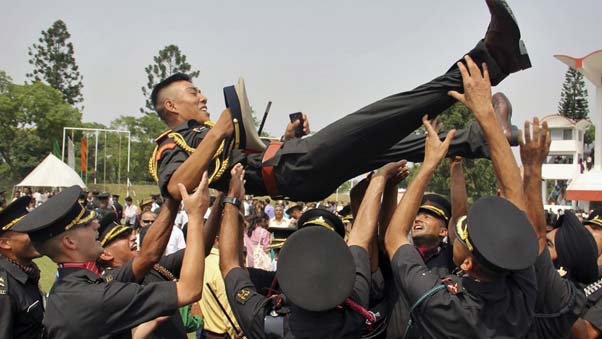
Contrary to popular perception, the Army does not necessarily seek flamboyant, hyper-aggressive or overtly theatrical personalities. Modern military leadership increasingly demands balance, psychological resilience and adaptability.
Leadership potential remains the most important quality. However, leadership is interpreted not as domination but as the ability to guide, influence and stabilise groups under difficult conditions. Candidates who attempt excessive aggression during group tasks often perform poorly because assessors view such behaviour as counterproductive to military cohesion.
Emotional stability is another critical requirement. Military officers routinely operate in environments involving fatigue, uncertainty, casualties and prolonged stress. Consequently, the Army places significant emphasis on psychological composure and emotional regulation.
The Army also values ethical reliability. Officers exercise lethal force within a democratic constitutional framework. Integrity, moral judgment and a sense of responsibility therefore remain indispensable.
Intellectual adaptability has become increasingly important as warfare evolves toward technologically integrated battlefields involving drones, cyber systems, artificial intelligence and information warfare. Future officers are expected to possess not only tactical capability but also cognitive flexibility and rapid learning ability.
The Army additionally values social adaptability because Indian military units are extraordinarily diverse in language, caste, ethnicity and regional identity. Officers must therefore possess the ability to integrate and lead individuals from widely differing social backgrounds.
Physical endurance remains important, though the modern Army increasingly recognises that psychological endurance may be equally critical in prolonged operational environments such as counter-insurgency operations or high-altitude deployments.
Strengths of the Indian Officer Recruitment System
The Indian officer selection system possesses several distinctive strengths that continue to attract global attention.
One major strength lies in its personality-centric assessment methodology. Few military systems invest as deeply in behavioural observation and psychological testing as the Indian SSB framework. The multi-day evaluation format reduces the likelihood of superficial or manipulated assessment.
Another strength is the social diversity embedded within the recruitment structure. The Army continues to attract candidates from urban centres, small towns and rural regions, thereby preserving its national character.
The system is also relatively economical compared to many Western officer commissioning structures that involve extremely expensive academy-based training pipelines. India’s recruitment model allows large-scale talent identification at comparatively lower financial cost.
The Indian Army additionally benefits from a strong regimental leadership culture in which recruitment, training and battlefield leadership remain closely interconnected. Officers are shaped not merely through institutional education but through regimental traditions and operational exposure.
The long legacy of military psychology embedded within the SSB framework remains another important institutional advantage. India inherited and adapted one of the world’s more sophisticated personality assessment structures and has preserved it with remarkable continuity.
Weaknesses and Criticisms
Despite its strengths, the system faces significant criticism and operational challenges.
One of the most persistent concerns relates to subjectivity within the SSB process. Since assessment depends heavily on human observation and judgment, critics argue that outcomes may occasionally vary depending on assessors and boards.
Another issue is the rapid expansion of the coaching industry around NDA, CDS and SSB preparation. Thousands of aspirants now undergo highly specialised coaching intended to shape behavioural responses and interview performance. This raise concerns that some candidates may project rehearsed personalities rather than authentic behavioural traits.
Critics also argue that communication-intensive evaluation methods may unintentionally favour urban and English-speaking candidates despite official efforts to prevent such bias. Candidates from rural backgrounds sometimes struggle not because of lack of leadership potential but because of lower social confidence or linguistic disadvantages.
The current recruitment framework is also criticised for insufficient emphasis on advanced technological aptitude. Traditional leadership qualities remain central to selection, but future warfare may require deeper assessment of cyber cognition, systems thinking and technological adaptability.
Lengthy recruitment timelines further discourage many aspirants. Delays between examinations, interviews, medical assessments and final merit lists sometimes stretch across several months.
Simultaneously, the Indian Army continues to face officer shortages, especially at junior leadership levels. This raises important questions regarding whether present recruitment mechanisms are sufficiently attractive or whether the selection process is excessively restrictive relative to organisational needs.
Reforms Under Consideration
The Indian Army has already begun exploring reforms intended to modernise officer recruitment and align it with emerging warfare realities.
One important area involves greater integration of technology-based assessments. Discussions increasingly focus on AI-assisted psychometric evaluation, digital behavioural analysis and computer-supported personality mapping.
Technical recruitment streams are being strengthened as the Army seeks greater technological competence within the officer corps. Engineering-oriented filtering mechanisms and science-based shortlisting systems are likely to expand further in the coming years.
The recruitment and integration of women officers have also undergone substantial reform. Judicial interventions and policy changes have gradually expanded opportunities for women officers to receive Permanent Commission across multiple branches.
Another emerging area concerns cognitive warfare capability. Future recruitment models may place greater emphasis on information management, cyber awareness, analytical reasoning and adaptability in technologically dense operational environments.
Military psychologists and strategic planners are also examining how traditional SSB methodologies can be supplemented with data-driven assessment models and longitudinal behavioural analytics without undermining the human judgment component that remains central to military leadership evaluation.
There is also growing discussion regarding rationalisation of the large number of fragmented entry schemes in order to create a more streamlined and integrated officer induction architecture.
Comparison with Major Global Militaries
The United States Army commissions officers primarily through the United States Military Academy at West Point, Reserve Officers’ Training Corps programmes and Officer Candidate Schools. The American system places stronger emphasis on academic leadership, university-level military education and decentralised commissioning structures. Compared to India, the United States relies less heavily on prolonged psychological evaluation and more on educational achievement, leadership records and institutional training.

The British Army commissions officers mainly through the Royal Military Academy Sandhurst. The Sandhurst system historically influenced Indian military selection philosophy and shares several conceptual similarities with India’s leadership-oriented approach. However, Britain’s much smaller military size permits more individualised training and mentorship compared to India’s mass-scale recruitment system.
China’s People’s Liberation Army relies heavily on military academies, technical competence and political reliability in officer selection. China is aggressively integrating artificial intelligence, robotics, cyber warfare and information systems into officer development programmes. Compared to India, the Chinese model is more technologically focused but less psychologically individualistic.
Israel follows a highly operationalised leadership model in which officers are often identified through battlefield performance and unit-level leadership demonstration rather than only through pre-commission testing. Israeli military culture places exceptional emphasis on initiative, innovation and mission-oriented adaptability.
Russia traditionally emphasises military academy education, operational discipline and branch-specific technical competence. Psychological testing exists but is less central than in India’s officer selection framework.
Comparatively, India’s system remains unique because of its extraordinary emphasis on personality evaluation combined with national-scale social diversity intake. However, India still lags behind several advanced militaries in simulation-based leadership evaluation, AI-enabled assessment tools, cyber aptitude identification and technologically integrated officer development systems.
The Strategic Importance of Officer Recruitment
The strategic significance of officer recruitment is increasing because warfare itself is undergoing fundamental transformation.
Future Indian Army officers will operate in battlefields characterised by drone swarms, cyber disruption, artificial intelligence-enabled targeting systems, electronic warfare, information operations and hybrid conflict environments. Officers may simultaneously manage kinetic combat, psychological warfare, digital communications and civil-military coordination.
Consequently, military leadership is evolving from purely battlefield command toward multidimensional strategic management under extreme operational complexity.
India’s geopolitical environment further intensifies this requirement. The long-term strategic competition with China, persistent tensions involving Pakistan, internal security challenges and the broader Indo-Pacific security environment demand officers capable of functioning across conventional and non-conventional conflict spectrums.
The traditional image of the officer as merely a battlefield commander is therefore gradually transforming into that of a technologically literate strategic leader capable of integrating military, informational and cognitive dimensions of warfare.
The Future of Officer Selection in India
The Indian Army is unlikely to abandon the SSB model because it remains deeply institutionalised and culturally respected. However, hybridisation of the recruitment system appears inevitable.
Future officer selection systems may increasingly incorporate artificial intelligence-assisted psychometric mapping, neuro-cognitive assessment tools, behavioural analytics, virtual tactical simulations and cyber aptitude evaluation mechanisms. Team-based strategic problem-solving exercises may also become more prominent.
At the same time, the Army will seek to preserve the human dimension of leadership assessment. Military command ultimately remains dependent on trust, courage, emotional influence and moral authority — qualities that cannot be fully measured through algorithms alone.
The challenge for India will therefore involve balancing technological modernisation with preservation of regimental ethos, battlefield leadership traditions and the human foundations of military command.
Conclusion
The Indian Army’s officer recruitment system remains one of the most sophisticated and psychologically intensive military selection architectures in the world. Its enduring strength lies in recognising that wars are ultimately fought not merely by weapons or technology, but by human beings led by individuals capable of inspiring confidence under conditions of extreme uncertainty.
The system has produced generations of military leaders who have performed effectively in conventional wars, counter-insurgency operations, peacekeeping missions and high-altitude deployments. Yet the strategic environment is changing rapidly. Artificial intelligence, hybrid warfare, cyber conflict, information operations and technological disruption are reshaping the very nature of military leadership.
India therefore stands at a critical transition point. The future officer recruitment system will likely combine the psychological depth of the traditional SSB framework with technologically sophisticated assessment mechanisms drawn from advanced global military models.
If these reforms are implemented intelligently, India could develop one of the world’s most advanced military leadership selection systems — one capable of producing officers suited not only for conventional battlefield command, but for the far more complex strategic conflicts of the twenty-first century.








A very timely article and suggestions by Maj Gen Rajan Kochhar, VSM, that should waken up our leaders & torch bearers so as to adapt to the rapidly changing strategic environment viz AI, hybrid warfare, cyber conflict, information warfare & tech disruptions that are reshaping the e tire scenario in which the military leadership will operate..