


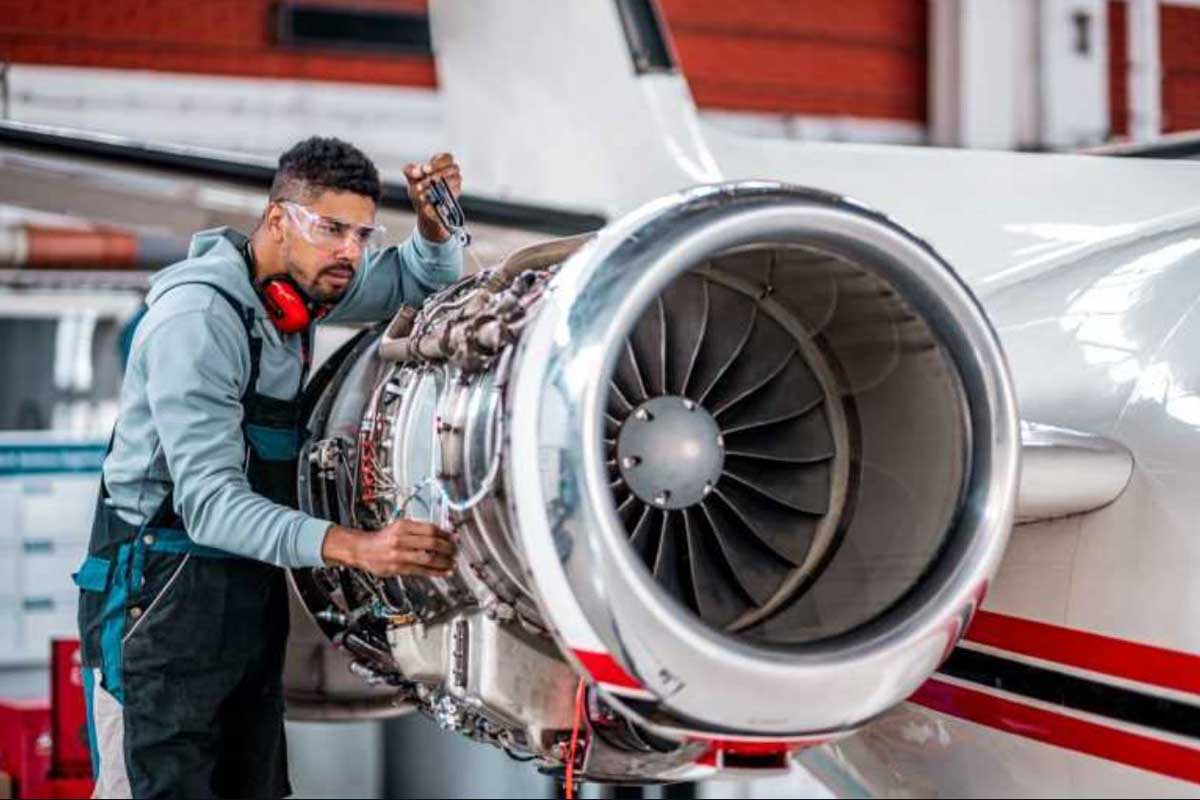
Behind India’s aviation boom lies an exhausted, underpaid and increasingly disillusioned technical workforce now pushing back against years of silent exploitation.
India’s aviation industry loves celebrating its glamour.
Record aircraft orders.
Mega airport inaugurations.
Airlines announcing expansion plans almost every quarter.
Politicians proudly proclaiming India as the world’s fastest-growing aviation market.
But beneath the polished terminals and media headlines lies a reality the industry has long tried to avoid discussing:
Aviation’s Most Exploited Lot, who actually keep aircraft safe & airworthy are reaching breaking point.
Across India, unrest among Aircraft Maintenance Engineers (AMEs), technicians and technical staff has erupted into protests, resignations, industrial action and growing resentment.
What many in the public are witnessing merely as a “technical staff strike” is, in reality, something far deeper:
A long-suppressed outburst against systemic exploitation within Indian aviation maintenance.
And the timing could not be more critical.
The Invisible Backbone of Aviation
Every passenger sees:
- Pilots
- Cabin crew
- Airlines
- Aircraft brands
Very few see the professionals signing the aircraft release before every flight.
Those signatures belong to:
- Aircraft Maintenance Engineers
- Licensed certifying staff
- Aircraft technicians
- Planning engineers
- Quality inspectors
- Technical services personnel
These are the people legally and morally responsible for certifying that an aircraft is safe to fly.
One overlooked defect.
One improper installation.
One missed inspection.
And hundreds of lives could be at stake.
Yet ironically, in India’s aviation hierarchy, technical personnel often remain among the least respected economically.
The Strike Is Not About One Company
Recent unrest involving Air India Engineering Services Limited merely exposed publicly what has quietly existed industry-wide for years.
The trigger may differ from organisation to organisation:
- blocked resignations,
- poor pay structures,
- contractual exploitation,
- lack of relieving letters,
- excessive workloads,
- stagnated career growth,
- pressure during aircraft shortages,
- management interference.
But the underlying frustration remains remarkably similar across the industry.
The Great Aviation Contradiction
India’s aviation market is booming.
- Over 1,500+ aircraft are on order.
- Airlines are expanding aggressively.
- MRO and aviation infrastructure investments are accelerating.
Yet the technical workforce sustaining this ecosystem often faces:
- stagnant salaries,
- contract-based insecurity,
- severe manpower shortages,
- night shifts,
- high accountability with low authority.
This contradiction has now become unsustainable.
The Most Dangerous Trend Nobody Wants to Discuss
One of the most alarming allegations emerging from the current unrest is the increasing dependence on:
- inexperienced manpower,
- apprentices,
- third-party contractual workers,
- and even retired technicians recalled into active maintenance environments.
Worker groups have raised concerns that fresh or insufficiently experienced personnel are being assigned to critical maintenance activities during manpower shortages.
This opens an uncomfortable but necessary discussion:
Has Indian aviation begun prioritising operational continuity over technical maturity?
Aviation Maintenance Is Not IT Outsourcing
Aircraft maintenance is not a spreadsheet exercise.
It is not a process where manpower can simply be “replaced.”
Technical maturity in aviation takes years to develop.
An experienced certifying engineer develops:
- fault intuition,
- systems understanding,
- troubleshooting instinct,
- maintenance judgement,
- and risk awareness.
These cannot be taught overnight.
Aviation history globally proves that many catastrophic incidents were not caused by major failures –
but by:
- overlooked details,
- fatigue,
- improper troubleshooting,
- procedural shortcuts,
- or inexperienced judgement.
The Human Cost of Aviation Expansion
India’s aviation sector wants:
- rapid expansion,
- reduced turnaround times,
- maximum aircraft utilisation,
- cost efficiency.
But somebody absorbs the pressure created by those ambitions.
Usually, it is the technical workforce.
AMEs and technicians frequently operate under:
- intense timelines,
- aircraft-on-ground (AOG) pressure,
- manpower shortages,
- management escalation,
- operational disruptions.
And unlike many professions:
Their mistakes become national headlines.
The “Penny Wise, Pound Foolish” Problem
Many operators attempt to minimise maintenance expenditure by:
- suppressing technical salaries,
- increasing contract staffing,
- reducing experienced manpower,
- delaying workforce expansion.
Initially, this improves balance sheets.
But eventually the hidden costs emerge:
- higher attrition,
- skill drain,
- low morale,
- repeated technical delays,
- increased aircraft grounding,
- safety exposure.
India’s civil aviation ministry itself recently revealed that hundreds of aircraft have been grounded over recent years due to technical defects and maintenance delays.
That statistic alone should worry the industry.
The Silent Brain Drain
A growing number of Indian AMEs and technicians are now:
- moving abroad,
- seeking Gulf opportunities,
- shifting to OEMs,
- joining foreign MROs,
- or leaving aviation entirely.
Why?
Because globally, technical personnel are increasingly valued as strategic assets.
Meanwhile, many Indian organisations still view them as:
“replaceable operational resources.”
That mindset is now backfiring.
The DGCA’s Difficult Balancing Act
The Directorate General of Civil Aviation finds itself walking a tightrope.
On one side:
- India’s aggressive aviation growth ambitions.
On the other:
- mounting operational pressure,
- manpower shortages,
- technical fatigue,
- and safety oversight responsibilities.
The regulator understands one critical reality:
Aviation safety cannot be compromised.
But the industry’s economics often push in the opposite direction.
The Industry’s Structural Problem
India’s aviation growth has outpaced:
- technical manpower development,
- licensing pipelines,
- training infrastructure,
- maintenance ecosystem maturity.
The result?
A severe mismatch between:
- aircraft induction rates,
- and availability of experienced technical professionals.
India may soon face not merely a pilot shortage – but a full-scale aviation maintenance talent crisis.
The Public Rarely Understands the Pressure
Passengers often complain:
- “Why is my flight delayed?”
- “Why was the aircraft changed?”
- “Why are flights getting cancelled?”
What they rarely realise is:
Sometimes those delays occur because technical personnel refused to compromise safety.
And that refusal deserves respect – not frustration.
The Strike Is a Warning Signal
The current unrest is not merely an industrial dispute.
It is an early warning indicator.
A warning that:
- aviation growth without workforce welfare,
- expansion without technical investment,
- and operational ambition without human sustainability,
will eventually destabilise the system itself.
What Needs to Change
1. Technical Personnel Must Be Strategically Valued
Not treated as operational expendables.
2. Salary Structures Need Rationalisation
Particularly for licensed and experienced certifying staff.
3. Contractual Exploitation Must Reduce
Long-term aviation safety cannot rely excessively on unstable staffing structures.
4. Experience Retention Must Become a Priority
Losing mature engineers is far costlier than retaining them.
5. Aviation Leadership Must Include Technical Voices
Many operational decisions today are excessively finance-driven.
Aviation’s Glamour Runs on Grease-Stained Hands
India’s aviation ambitions are legitimate.
The country deserves:
- world-class airlines,
- global MRO hubs,
- aerospace leadership.
But none of that is sustainable unless the people maintaining those aircraft feel:
- respected,
- protected,
- fairly compensated,
- and professionally valued.
Because ultimately:
Aircraft do not fly safely because of marketing campaigns.
They fly safely because somewhere in a hangar, often at 3 AM, an exhausted engineer still chose to do the job correctly.
My Two Cents
“The aviation industry can ignore angry engineers temporarily. It cannot ignore the consequences of losing them permanently.”










As on date AIESL accepted resignations of 180 engineers after 13 days of protests, but disputes over terminations, pay and career growth continue to keep workers off maintenance duties and all this could show up affecting flight safety over a period on coming one to several years. AIELS needs to gear up and start reviewing the actual reasons of unrest, whether it was a management failure or simply exploitation of Engineers and Technicians that boiled over..