

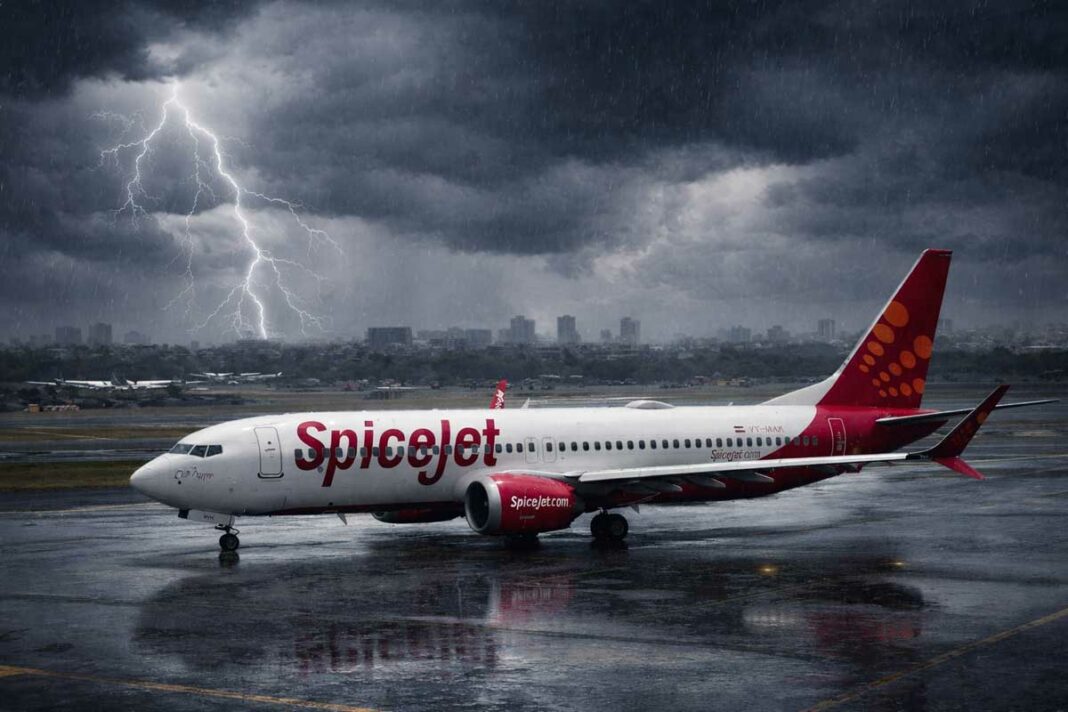
As legal pressures intensify and liquidity dries up, India’s once-resilient low-cost carrier faces its toughest test yet
India’s aviation sector is once again under the spotlight—and at the center of the storm is SpiceJet, an airline that has long survived against the odds but now appears to be approaching a critical breaking point.
In a dramatic submission before the Delhi High Court, the airline warned of a potential operational collapse if forced to immediately deposit ₹144 crore (≈ $17 million) in an ongoing legal dispute with former promoter Kalanithi Maran and KAL Airways.
“An immediate payout could destabilize operations,” the airline argued—an admission that has sent alarm bells ringing across the industry.
A Legal Battle Turning Existential
The dispute traces back to a 2015 share transfer agreement, which has since evolved into a prolonged arbitration and legal battle. While SpiceJet maintains that it is ultimately entitled to refunds, courts have continued to press for compliance with interim payment directives.
The situation escalated further when the Supreme Court of India declined to stay the deposit order—tightening the financial noose.
For an airline already battling liquidity constraints, this is no longer just a legal issue—it is a survival challenge.
Global Liabilities Add to the Pressure
Compounding domestic legal troubles, a UK court recently directed SpiceJet to pay approximately $8 million (₹65–70 crore) to an engine leasing company over unpaid dues related to:
- Maintenance reserves
- Lease rentals (2020–2022 period)
This development reinforces a troubling pattern:
- Increasing international creditor action
- Erosion of lessor confidence
- Rising legal exposure across jurisdictions
The message from global stakeholders is clear: patience is running out.
Financial Fragility: The “Going Concern” Warning
SpiceJet’s financial health has been under sustained scrutiny. Auditors have repeatedly flagged “going concern” risks, pointing to:
- High debt levels
- Negative net worth
- Persistent operational losses
At the same time:
- Only a limited portion of the fleet remains operational
- Aircraft groundings continue to impact revenue generation
- Market share has steadily declined amid fierce competition
Fleet Shrinkage and Operational Strain
An airline’s strength lies in its fleet—and this is where the cracks are most visible.
Over recent years:
- Aircraft repossessions by lessors have increased
- Several aircraft remain grounded due to unpaid dues
- Operational schedules have faced repeated disruptions
In a sector where reliability defines brand value, such instability can quickly spiral into passenger distrust and revenue erosion.
Liquidity Measures: Too Little, Too Late?
In an attempt to stay afloat, SpiceJet has initiated steps to unlock liquidity, including:
- Sale of non-core assets such as land holdings in Gurugram
- Structured fundraising efforts
- Ongoing capital infusion attempts
However, the Delhi High Court refused to accept these assets as immediate security, highlighting a deeper concern:
The airline lacks readily deployable cash reserves.
External Pressures Mounting
The challenges are not limited to internal financial stress.
SpiceJet is also grappling with:
- Rising Aviation Turbine Fuel (ATF) prices
- Route disruptions due to geopolitical tensions in West Asia
- Increased fuel burn and operational costs
These external shocks are hitting at a time when the airline’s financial resilience is already stretched thin.
The “Too Big to Fail” Illusion
For years, SpiceJet has managed to survive through:
- Timely funding inflows
- Promoter support
- Perceived regulatory flexibility
This has led to a widespread industry perception of the airline being a “protected player”—a so-called blue-eyed boy of the ecosystem.
But the current crisis suggests a harsh reality:
Even institutional goodwill and financial patchwork have limits.
With increasing scrutiny from courts, lessors, and global stakeholders, the cushion that once supported SpiceJet may no longer be sufficient.
A Broader Industry Signal
SpiceJet’s situation reflects a larger truth about Indian aviation:
Sustainability cannot be built on intermittent funding—it must be backed by structural financial discipline and operational stability.
In today’s environment:
- Lessors demand accountability
- Courts enforce compliance
- Markets reward consistency
The Road Ahead: A Defining Moment
The coming months could determine the airline’s fate:
- Can it secure immediate liquidity to meet court obligations?
- Can it rebuild trust with lessors and global partners?
- Can it stabilise operations and restore fleet strength?
Or,
Is the industry witnessing the slow unraveling of one of India’s most resilient yet strained carriers?
Conclusion: Runway Running Out?
India’s aviation sector is entering a phase where:
- Scale matters
- Competition is unforgiving
- Financial discipline is non-negotiable
For SpiceJet, the challenge is no longer just survival—it is credibility, continuity, and confidence.
Because in aviation, when the cash flow weakens, the runway shortens.